
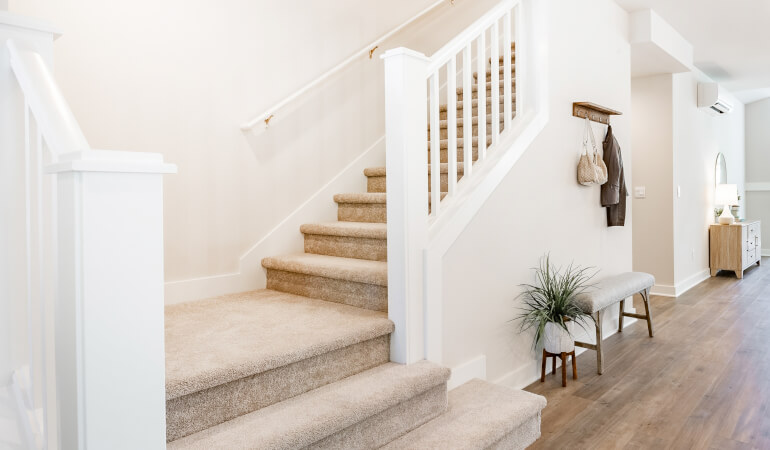
A staircase requires more thought than any other area of the house when it comes to carpeting. Stairs take constant, concentrated foot traffic, so choosing the best carpet for high-traffic stairs means prioritising resilience above almost everything else — not just how it looks on the day it’s fitted, but how it performs two or three years in.
 Add to Preferred Sources
There are several factors to weigh up: material, pile construction, colour, and installation method. This article covers each of them, along with the main types of stair carpet available, so you can make a confident decision.
TL;DR
- Nylon is the most durable material for high-traffic stairs and resists staining better than most alternatives.
- Twist pile and tight loop constructions outlast loose or high-pile carpets on stairs.
- Keep pile height low — short fibres resist compression and are safer underfoot.
- Stair runners are the most popular fitting style in UK homes, leaving the stair edges exposed.
- Mid-tone colours in grey, brown, or green hide everyday wear and reduce how often the carpet looks tired.
Table of Contents
Is it better to carpet or not carpet stairs?
There are, of course, advantages and disadvantages of adding a carpet to the stairs. Your choice to install a carpet depends on your personal preferences. So, let’s take a look at the pros and cons of having a carpet:
Pros of having a carpet
- Safe solution. Compared to laminated stairs, carpeted steps often provide greater stability and lower the risk of slipping or falling.
- Comfort. Carpeting gives the steps a softer, more cushioned surface to walk on, especially for bare feet or during the winter.
- Design. Carpeting can improve your interior space’s overall appearance and atmosphere. It is possible to accurately match it to your decor because it is available in a broad variety of colours, patterns, and textures.
- Covers imperfections. Stairs with minor flaws and wear can be concealed by carpeting, which prolongs their life and minimises the need for annual refinishing.
- Noise reduction. Carpeted stairs reduce the noise when you walk upstairs and downstairs. This might be especially helpful if you own a house with many floors.
- Higher levels of insulation. Stair carpets can keep your house warmer throughout the winter and reduce energy costs.
Cons of stairs carpeting
- Regular maintenance. It is more challenging to vacuum carpeted stairs, compared to the large carpet in the living room or the small bathroom rug. Still, the stairs are just as susceptible to spills, stains and wear, so regular vacuuming may not be enough to preserve their pristine looks.
- Allergens. People who have asthma or allergies may experience respiratory problems as carpets retain allergens such as dust, pet dander, and pollen.
- Durability. Stair carpeting is more prone to damage over time as located in an area with high traffic. So it will probably need to be replaced more frequently than other floor coverings.
- Moisture absorption. Carpeting can absorb liquids in places that are prone to spills or moisture. If spills are not cleaned quickly and fully, this could result in the growth of mould, mildew and the development of some unpleasant smells.
- Aesthetics. If your staircase is built of high-quality hardwood or other visually appealing materials, carpeting may hide its natural visual appeal.
What to Consider When Choosing a Carpet for High-Traffic Stairs?
The four most important factors to keep in mind are the material of the floor covering, its durability and resistance to wear and tear, the installation, the colour and the way it fits into the interior. Let’s look into each of these more closely…
Materials
Foot traffic has a higher impact on stairs than on flat areas because of the increased force of gravity of the descending stairs. This means when you choose the best carpet, consider the materials’ quality and keep the pile height (thickness) low.
Look for a low-pile carpet which is made of synthetic nylon and it has twisted or cut piles. It will provide the best stability for your staircases and will be easy to clean. A great option is a high-grade nylon Berber. It has a superior quality, texture and it is resistant to stains.
Still, keep in mind that some Berbers have looped piles that might snag on your pet’s claws if you have any. Also, as some polyester carpets can be slippery, this could increase the risks of falls. Fortunately, there are non-slip stair mats and carpets that are worth looking into.
You can combine wool and polypropylene, which will be easier to clean and maintain. A combination of wool and nylon will be more sturdy and less prone to flatten over time.
Another suitable option, yet pricey, is wool carpet. It doesn’t easily flatten and repels stains and dirt.
Man-made fabric like polypropylene is a less expensive and more effective stair carpet choice. However, polypropylene has a tendency to flatten unless it has a very short pile.
Durability
Texture is important to consider when selecting durable carpet for your stairs. Texture can influence the carpet’s durability, appearance and comfort.The surface feel of a carpet can range from firm and thick to soft and lush.
The pile of a carpet and the way its fabric fibres are looped, twisted, or chopped determine how thick it is. Carpets with tight loops or low piles typically last longer than those with loose loops or high piles. The tightly woven, short fibres in low-pile carpets are more resilient to compression and flattening.
Berber carpets and other loop pile carpets are particularly durable and will not break under heavy foot use. If you have a dog or a cat companion, though, these might not be the greatest option because their claws might get hooked in the loops and rip the cloth.
The way the cloth is cut and tightly twisted gives twist pile carpets another advantage. They usually have very high durability. Twist pile carpets are a common stairs carpet option since they can withstand heavy usage while maintaining their shape.
Colour and style
When a carpet “bends,” or wraps around the edges of a tread, or joins seams around a post, it can be helpful to visualise the final result. Take into account the carpet’s pile direction and installation aspects as well. For functionality and aesthetic reasons, the pile on stairs should run vertically rather than horizontally.
Stripes for a spacious-looking home
Striped carpets not only drive attention but they will also create the impression of size. You can choose between horizontal, suitable for larger stairs or vertical for longer ones. Additionally, striped stair carpets hide imperfections caused by heavy traffic and footprints.
Neutral hues for simplicity
Even though considered as simple and monotonous, neutral-coloured carpets can provide a warm and inviting impression on paths and staircases. These carpets look especially good with white or light-coloured walls. They visually open up limited spaces and give your house a contemporary farmhouse feel.
Mid-tones to hide imperfections
If you have either children or pets you should consider a carpet that can mask potential stains and dirt. Combinations of mid-tone greys, browns or greens will cover up stains and minimise the need to hoover the stair carpet every once in a while.
Installation
The installation style is another important factor when choosing your stairs carpet. Here are the two most common installation methods:
Waterfall method
In the “Waterfall” stair carpet installation method the carpet falls over the tread edge and down the riser straight to the next tread. It creates the illusion of a flowing waterfall without being moulded to the riser. This style is the most used because of its tidy appearance.
Hollywood style
The “Hollywood” style describes an installation technique where the carpet is nailed straight to the stairwell. In order to shape the nosing to meet the riser, the carpet is wrapped around the tread’s edge. Select this sophisticated installation approach to create a design statement if your staircase is the primary focal point in the room.
Types of stair carpets
The same considerations around material, pile, and colour apply whether you are carpeting a staircase or a hallway — both are high-traffic connecting areas that take the same kind of concentrated daily wear.
- Stair runners. This is the most popular and stylish choice. Stair carpet runners are decorative carpet strips that run the length of staircases, leaving a strip of exposed steps on each side.
- Stair treads. Stair treads are the least expensive option because they require the least amount of material. Similar in function and advantages to stair runners, stair treads are made of carpet pieces that are meant to stick to the individual stairs.
- Wall-to-wall carpeting. The most suitable choice if you wish to cover up the unsightly plywood or damaged hardwood flooring on your stairs. This approach is usually utilised in homes when the entryway and staircase are carpeted in the same material, covering every step completely.
How much does stair carpet cost in the UK?
Stair carpet prices vary considerably depending on material and construction. At the budget end, polypropylene carpets typically cost around £5–15 per square metre. Mid-range twist pile nylon options generally sit between £15–30 per square metre, and represent the best balance of durability and price for most UK staircases. Wool and wool-blend carpets tend to start at £30 per square metre and climb from there. Bear in mind that these are material costs only: professional fitting adds to the overall price, and stairs are more labour-intensive to carpet than flat rooms. Note: prices are indicative and should be verified against current UK retailer pricing before use.
Are you struggling with old carpet stains and dirt removal?
Enter your postcode to view our rates and availability in your area.
For questions about the services we offer visit our main site
Frequently Asked Questions
What is the most durable carpet for stairs?
Nylon is the most durable carpet material for high-traffic stairs. A low-pile twist pile nylon carpet holds its shape under heavy use, resists compression, and is straightforward to clean. Tight loop constructions such as Berber are also hard-wearing, though they can catch on pet claws, so they are better suited to pet-free households.
How much does it cost to carpet stairs in the UK?
Material costs typically range from around £5–15 per square metre for polypropylene, £15–30 per square metre for mid-range twist pile nylon, and £30 or more per square metre for wool. Professional fitting is charged on top of material costs, and stairs take longer to carpet than flat areas, so budget accordingly. Verify current pricing with UK retailers before committing.
Is a stair runner or wall-to-wall carpet better for high-traffic stairs?
Both work well on high-traffic stairs, but for different reasons. A stair runner leaves the stair edges exposed, which makes it easier to replace when the carpet wears in the centre. Wall-to-wall carpeting gives complete coverage and is useful where the underlying stair surface is unsightly, but worn sections cannot be repositioned the way a runner can. Runners are the more popular choice in UK homes.
Can I use the same carpet on my stairs and hallway?
Yes, and it is a common approach. Stairs and hallways share the same challenges: high foot traffic, a narrow corridor of wear, and the need for something that cleans easily. Using the same carpet across both areas creates a consistent look and means any leftover material from one can be used on the other. The same material and pile recommendations apply to hallway carpet as to stair carpet.
Conclusion
The right carpet for high-traffic stairs is not simply the most expensive one or the best-looking one in the showroom. It is the one where material, pile construction, and installation method all work together. Get those three things right and a stair carpet will still look presentable after years of daily use. Get any one of them wrong and even a premium product will show its age quickly.
If your existing stair carpet has already taken a beating and needs more than a vacuum can offer, a professional carpet cleaning service can restore a significant amount of its appearance before you consider replacing it outright. Replacement is not always the only option.





Leave a Reply