
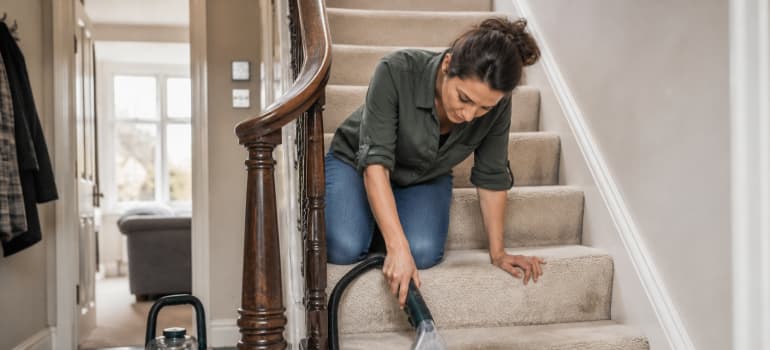
Stair carpets take more punishment than almost any other floor covering in the house. Every trip up and down grinds dirt deeper into the pile, and because stairs are narrow and awkward to work on, most people settle for a quick vacuum and call it done. That’s usually where the problems start. Learning how to clean stair carpet properly isn’t complicated, but there are a few things that catch people out, and in older UK homes, moisture is at the top of that list.
A stair carpet that’s been cleaned the wrong way can end up worse than one that hasn’t been touched.
TL;DR
- Vacuum stair carpets regularly with a stair attachment to remove loose debris before it works its way into the pile.
- Use low-moisture cleaning methods wherever possible to avoid soaking the carpet backing, which can lead to mould.
- Always dry stair carpets thoroughly after cleaning, using fans or a dehumidifier, especially in older homes.
- Spot-test any cleaning solution before applying it across the full carpet to avoid colour damage or fibre shrinkage.
- Routine maintenance prevents the need for heavy deep cleans and reduces the risk of hidden damp building up under the carpet.
Table of Contents
Step-by-Step Guide to Clean Your Stair Carpet
Deep cleaning stair carpet is a methodical job. Done in the right order, it’s manageable. Done out of order, you end up re-dirtying steps you’ve already cleaned or leaving moisture trapped where you can’t easily get to it. The process below works for most wool-blend and synthetic stair carpets. If yours is a delicate natural fibre like sisal or seagrass, the method is different and professional handling is worth considering.
A complete process for deep cleaning stair carpet from preparation through to final drying, using low-moisture methods to minimise mould risk.
Gather Your Supplies
You’ll need a vacuum with a stair or crevice attachment, a soft-bristled brush, your chosen cleaning solution (dry foam, low-moisture spray, or a diluted mild detergent), clean white cloths for blotting, a bucket of clean water for rinsing if needed, and a fan or dehumidifier for drying. White cloths matter here because coloured ones can transfer dye to damp carpet fibres. Get everything together before you start so you’re not leaving wet carpet unattended mid-job.
Vacuum Thoroughly
Start at the top step and work your way down. Use the stair attachment or narrow nozzle on every tread and riser, paying particular attention to the edges where carpet meets skirting or spindles. This step removes loose debris, hair, and surface dirt that would otherwise turn to muddy paste the moment you introduce any moisture. Don’t skip this. Vacuuming after cleaning is not the same as vacuuming before it.
Spot-Test Your Cleaning Solution
Apply a small amount of your chosen cleaning product to an inconspicuous section of carpet, ideally a riser near the top. Leave it for 10 minutes then blot with a white cloth and check for any colour transfer or change in the fibre texture. If the cloth picks up colour or the carpet looks different, switch products before you’ve treated the whole staircase.
Apply the Cleaning Solution
Work from the top step downwards, applying your chosen product as directed. If using a foam cleaner, apply it evenly across each tread and riser and work it gently into the pile with a soft brush using circular motions. If using a low-moisture spray, mist lightly and work in with a cloth or brush. The goal is coverage without saturation. You should not be able to squeeze moisture out of the carpet at any point.
Agitate to Lift Dirt
Use a soft-bristled brush to work the product through the pile in short strokes, following the direction of the fibres. This loosens dirt that’s embedded in the base of the carpet rather than just sitting on the surface. For heavily soiled treads, a second pass with fresh product is better than pressing harder on the first. Pressing hard on carpet compresses the pile and can grind dirt deeper rather than lifting it.
Blot and Remove Residue
Once the product has had time to work (check the label, typically a few minutes for foams), blot each section with a clean white cloth to lift dirt and residue. If you’re rinsing, use a cloth wrung out in clean water rather than pouring water over the step. Work from the outer edge of each tread inward to avoid spreading residue. Replace cloths as they dirty.
Dry Thoroughly
This is the step most people underestimate. Position a fan to direct airflow across the staircase and, if possible, run a dehumidifier in the hallway. Leave it running for several hours, not 20 minutes. For fully wet-cleaned stairs in a poorly ventilated stairwell, drying overnight is safer. Don’t use the stairs until the carpet is completely dry to the touch, including at the edges and in the corners of each tread where moisture lingers longest.
If your stair carpet sees very heavy traffic or hasn’t had a proper clean in over a year, a professional carpet cleaning service uses specialist equipment to extract embedded dirt and residue from deep within the pile, well beyond what any DIY method can reach.
Different Methods to Clean the Stair Carpet
The method depends on how dirty the carpet is, what material it’s made from, and how much drying time you have. There’s no single answer that works for every situation, but there is a clear order of risk. Methods that use more moisture carry more risk on stairs. That’s not a reason to avoid them entirely, just a reason to plan properly.
- Vacuuming with a stair attachment. The first step before any other cleaning method and a solid maintenance routine on its own. A narrow nozzle or turbo brush head gets into the edge of each tread where dirt collects. Use it at least once a week on high-traffic stairs. This won’t deep clean, but it removes the surface layer that would otherwise get pressed further into the pile.
- Hand cleaning with a mild detergent. Mix a small amount of washing-up liquid or a carpet-specific cleaner with water, work it gently into the carpet with a soft brush, then blot rather than rub. Good for spot cleaning fresh stains. The key is using as little liquid as possible and blotting dry immediately after. Rubbing spreads the stain and damages the pile.
- Dry foam cleaning. A foam product is applied to the carpet, worked into the pile, left to dry, then vacuumed away. It carries much less moisture risk than wet methods and works well for general refreshing and light soiling. Particularly useful on stairs where full wet extraction isn’t practical. The foam encapsulates the dirt and lifts it as it dries.
- Dry powder cleaning. A granular powder is worked into the carpet fibres with a brush, left to absorb dirt and odours, then vacuumed out. Almost zero moisture involved, which makes it the safest option for older homes or carpets with known damp issues nearby. Not as effective on heavily soiled carpets, but excellent for maintenance between deeper cleans.
- Portable carpet cleaning machine. A compact hot water extraction or spray-and-extract machine can be used on stairs with the right attachment. It applies solution and extracts it in one pass, which limits the total moisture left behind. Effective for a proper deep clean, but requires thorough drying afterwards. Not suitable for carpets laid over damp concrete or in poorly ventilated stairwells without additional drying measures in place.
Does Mould Grow Under Stair Carpet?
Yes, and more often than most people expect. Mould under a stair carpet develops quietly. You don’t see it building up. You just notice a faint musty smell one day, pull back the carpet edge to investigate, and find dark patches on the underlay or the timber underneath.
In older UK homes with solid walls, suspended timber floors, or limited central heating in the hallway, the conditions for mould growth are frequently present regardless of how carefully you clean. The issue isn’t just what’s on the surface of the carpet. It’s what’s happening underneath it. The combination of foot traffic pressing moisture into the backing, cold wall surfaces creating condensation, and inadequate airflow in a closed stairwell creates a genuinely risky environment. Mould needs moisture, warmth, and something organic to feed on. Carpet backing, adhesive, and timber joists provide plenty of the third. Prevention comes down to controlling the first two.
- Improve airflow in the stairwell. Keep the door at the bottom of the stairs open when possible. Even passive air movement reduces humidity. If the stairwell has no window, a small fan left running periodically makes a real difference.
- Use a dehumidifier during and after cleaning. Running a dehumidifier in the hallway for several hours after any wet cleaning brings moisture levels down faster than natural drying alone. This is especially important in autumn and winter when outdoor air is cold and damp.
- Lift a corner of the carpet periodically. Check the underlay and the top of the bottom step every few months. If you spot any discolouration, a musty smell, or surface texture that looks like it’s breaking down, those are early signs. Catching it early means replacing underlay rather than subfloor boards.
- Assess for hidden damp before laying or replacing carpet. If you’re re-carpeting stairs in an older property, check the timber for any existing moisture before the new carpet goes down. A damp meter is cheap and the information it gives you is genuinely useful. Laying new carpet over a damp substrate just locks the problem in.
- Don’t allow wet outdoor shoes to sit on carpet treads. Sounds obvious, but it’s a consistent source of moisture introduction that most households don’t think about. A shoe rack in the porch or at the bottom of the stairs reduces the amount of wet material being repeatedly pressed into the carpet pile.
- Ensure adequate heating in the hallway. Cold surfaces encourage condensation. A hallway that’s significantly colder than the rest of the house creates a moisture trap. It doesn’t need to be warm, just not neglected entirely.
Frequently Asked Questions
How do I choose the right cleaning method for my stair carpet?
Start with what the carpet is made from. Wool and wool-blend carpets are sensitive to excess moisture and harsh alkaline cleaners, so low-moisture foam or dry powder methods are safer choices. Synthetic carpets are more forgiving but still benefit from minimal wetting on stairs. If you’re unsure of the fibre content, check the label on the underside or test a small hidden patch before committing to any method.
Why should I avoid over-wetting stair carpet during cleaning?
Stair carpets have restricted airflow on most sides, especially where they meet the wall and skirting. When excess moisture penetrates the carpet backing and underlay, it can take days to fully dry in a closed stairwell. Damp underlay is an ideal environment for mould spores, which are always present in indoor air. The mould doesn’t appear immediately, which is why over-wetting often goes unnoticed until the problem is already established.
Can I use a steam cleaner on stair carpet?
Steam cleaners can be used on stair carpet but come with a specific caveat: they inject moisture as well as heat, and the drying window on stairs is longer than on flat floors. Steam is effective at killing bacteria and loosening surface soiling, but it won’t remove embedded grime without agitation. If you do use steam, follow immediately with a dry pass using clean cloths and run a fan or dehumidifier for several hours to prevent moisture building up in the underlay.
Is your stair carpet due a professional clean?
Enter your postcode to view our rates and availability in your area.
For questions about the services we offer visit our main site
Conclusion
Knowing how to clean stair carpet isn’t just about shifting visible dirt. It’s about choosing methods that don’t create hidden problems in the process. Low-moisture techniques, proper drying, and regular checks underneath the carpet keep the whole thing in good shape for longer, particularly in older homes where the conditions for mould growth are already present.
Routine maintenance is what prevents the need for drastic action. Vacuum often, treat spills quickly, and don’t let cleaning become a once-a-year emergency. The staircase is one of the busiest areas in the house. It deserves more consistent attention than it usually gets.





Leave a Reply