

How do you clean iron plate with toothpaste and shift those black marks and burnt-on grime before you give up and reach for a new one? Rather than rushing to buy a replacement iron when faced with a sticky, scorched soleplate, consider giving your current one a thorough clean. With some inexpensive cleaning products and a bit of effort, you may be surprised at how much you can restore its shine. If your iron is dirty, try cleaning it before searching for a replacement!
The most effective way to clean your iron plate is to use toothpaste, baking soda, and white vinegar.
 Add to Preferred Sources
TL;DR
- Apply a small amount of plain white toothpaste to the cool, unplugged soleplate, rub with a soft cloth in circular motions, then wipe clean and steam-flush with plain water.
- For baking soda: mix two teaspoons with water to form a paste, rub onto the soleplate, wipe off, then steam on a towel for 5 minutes.
- For white vinegar: wipe the soleplate with a 50/50 vinegar-water solution, then steam-flush with plain water.
- To descale steam vents, fill the tank one-third with white vinegar and run on steam until empty, then repeat with plain water.
- Always unplug the iron and let it cool completely before cleaning the soleplate.
Table of Contents
How to clean an iron plate with toothpaste
Following these simple steps, you can easily clean your iron plate with toothpaste and remove any dirt, black marks, or grime accumulated on it over time:
How to clean an iron plate with toothpaste in seven steps, using equipment you already have at home.
Let the iron cool completely
Make sure that your iron is completely cooled down before cleaning it. Ensure your iron is unplugged, the water tank is empty, and the metal plate is cold.
Apply toothpaste to the soleplate
Apply a small amount of plain white toothpaste onto the iron’s soleplate — the flat part that comes in contact with your clothes.
Rub with a soft cloth
Rub the toothpaste onto the soleplate with a soft cloth or sponge, using circular motions. Be gentle to avoid damaging the surface.
Tackle hard-to-reach areas
You can use a toothbrush to scrub the toothpaste more effectively for hard-to-reach areas or stubborn stains.
Wipe off the toothpaste
Once you’ve covered the entire soleplate, wipe off the toothpaste with a clean cloth.
Steam-flush with plain water
To remove any leftover residue, fill the iron with water and turn it on to the steam setting. Hold the iron over a sink or a towel and let the steam escape for a few minutes. This will help flush out any remaining toothpaste.
Let the iron cool before use
Let the iron cool down completely before using it again. This method works safely on stainless steel, ceramic, and non-stick soleplates.
Other ways to clean an iron plate
Vinegar, baking soda, and salt are all excellent cleaning agents that can be used to clean an iron plate. Try using one of these miracle cleaners to remove any build-up or stains on your iron.
How to clean an iron plate with baking soda
Baking soda is especially effective for removing burnt-on black marks and mineral deposits from the iron base plate.
- Make sure that your iron is unplugged, that the water tank is empty, and that the metal plate is cold.
- Mix two teaspoons of baking soda with water to make a paste.
- Apply the soda paste to the dirty areas of the iron plate.
- Rub the plate with a clean cloth until there is no dirt.
- Wipe the plate with a clean cloth.
- Plug your iron in and fill the tank with water.
- Place your iron on top of an old towel or a clean cloth and set it to steam.
- Leave it for 5 minutes and you will have a clean iron.
How to clean an iron with white vinegar and baking soda
- Make a mixture of water and vinegar in equal parts.
- Clean the dirty areas with this mixture and a clean rag.
- Plug your iron in and fill the tank with water.
- Place your iron on top of an old towel or a clean cloth and set it to steam.
- Let it sit for 5 minutes.
For really stubborn stains, make a paste out of two teaspoons of baking soda and white vinegar, then simply follow the “Baking soda” steps above.
How to clean an iron with dryer sheets
- Set your iron to the lowest heat setting and switch it on.
- Gently rub the metal plate with new dryer sheets until the dirt is gone.
- Turn your iron up to the highest heat setting and iron an old towel to remove any residue left by the dryer sheets.
How to clean an iron with salt and vinegar
- Add three or 4 teaspoons of salt to some white vinegar and heat this mixture.
- Keep heating until the salt is completely dissolved but don’t let it boil.
- Let the mixture cool.
- Dip a clean cloth into the salty vinegar and clean the metal plate.
- Plug your iron in and fill the tank with water.
- Place your iron on top of an old towel or a clean cloth and set it to steam.
- Leave it for 5 minutes and marvel at your sparkling clean iron.
How to remove black marks from an iron plate
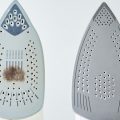
Black marks on an iron soleplate are almost always one of three things: burnt-on fabric fibres from ironing at too high a temperature, synthetic residue melted onto the plate, or starch build-up baked on over repeated use. None of them are permanent. The right method depends on how heavy the deposit is.
For light black marks and everyday grime, the toothpaste method above works well on all soleplate types, including ceramic. For more stubborn burnt-on deposits, a baking soda paste gives you slightly more abrasive action without scratching the surface. For heavy scorch marks where neither paste is shifting the residue, the salt-and-vinegar method is the most aggressive option in this list and is best suited to stainless steel soleplates rather than ceramic or non-stick coatings.
- Identify the deposit type: fabric fibre, synthetic residue, or starch build-up. Starch and fibre tend to be brown-black and flaky; synthetic residue is often darker and more tacky.
- Start with the toothpaste method for light marks — it’s the safest option across all soleplate coatings.
- Move to the baking soda paste if the toothpaste hasn’t shifted the residue after one pass.
- Use the salt-and-vinegar method only for heavy scorch marks on stainless steel soleplates — avoid it on ceramic or non-stick surfaces.
- Always finish with a steam-flush on a clean towel to clear any residue left by whichever cleaning method you used.
How to descale an iron with white vinegar
Dirt and scorch marks are not the only things which can affect the performance of your iron. Limescale can cause poor performance as it builds up around steam vents and can eventually block them. You can also use a paste of bicarbonate of soda and water on the external steam vents before steaming through — this is particularly effective for older irons with stubborn mineral deposits. Follow these steps to descale your iron:
- Make sure that your iron is unplugged, the water tank is empty, and that the metal plate is cold.
- Pour white vinegar, or a diluted vinegar/water mixture, into the water tank until around one-third of the tank is filled.
- Place your iron on top of an old towel or a clean cloth and set it to steam.
- Let the iron steam on a medium heat until the tank is empty.
- Fill the tank with water and let it steam until empty. This will remove any lingering traces of vinegar and dirt from the steam vents.
- Dip a cotton swab into the water and vinegar mixture and clean the steam vents of any leftover limescale.
- Add more water to the tank and let it steam on top of an old towel for 5 minutes.
How to prevent burn marks in the future
Now that your iron is nice and clean, you probably don’t want to go through the cleaning process again in the near future. The best way to avoid this is to pay more attention to the heat settings. Try not to use the highest setting as this can cause more scorch marks to build up. Never leave a hot iron resting face-down on fabric — it can scorch or melt almost any material in seconds.
Frequently Asked Questions
Can I use toothpaste to clean a ceramic iron plate?
Yes — plain white toothpaste is safe for ceramic soleplates. Apply a small amount to the cool, unplugged plate, rub gently with a soft cloth in circular motions, then wipe clean and steam-flush with plain water. Avoid scrubbing pads, which can scratch the ceramic coating.
Why does my iron have black marks on the soleplate?
Black marks are usually caused by burnt-on fabric fibres, synthetic residue, or starch build-up baked onto the plate at high heat. A baking soda paste or toothpaste application removes most of them without damaging the surface.
What is the best toothpaste to clean an iron?
Plain white toothpaste — the basic paste variety — works best. Gel toothpaste and coloured or striped toothpastes should be avoided as they can smear onto the soleplate and may not have the same mild abrasive action.
Get a professional cleaner?
Enter your postcode to view our rates and availability in your area.
For questions about the services we offer visit our main site
Conclusion
So there we have it, who would have thought that simple toothpaste and other common household items could be used to effectively clean an iron? If the bottom of your iron is covered in scorch marks and dirt, follow the tips here and it’ll be as good as new in no time.





Just tried the salt and paper bag trick and it WORKED! In fact, I just used an envelope because I was out of paper bags.
“With a history spanning at least 1000 years, it is no surprise that we continue to iron our clothes….” How is that statement true when we have only had the capability of ironing clothes for 136 years?
Thank you for the question, Je.
We forgot to include the source above, our research brought us here – http://www.oldandinteresting.com/antique-irons-smoothers-mangles.aspx.
Quite peculiar, but ironing started happening long long ago, though in a much more primitive form, however, purpose remained the same.
Wont the iron burn the old cloth i set it on?
Make sure the iron is unplugged, Dammie, as the instructions say.
The instructions, at the point of putting the iron on the towel or cloth for 5 mins, clearly read, “Plug your iron in and fill the tank with water”.
No need to be condescending to your reader.
Dammie I found it did scorch the old towel, so recommend keep an eye on it for the 5 minutes just in case anything unsafe happens. If it works for you, a small scorched area on an old towel is a small price to pay.
Sadly I found the remedies did not work for me. Some brown dirt came off; then I had to clean the toothpaste out of the holes with cotton buds, and go back to the baking soda method. May go buy a commercial product, it worked better for me in the past.
Does this cleaning hack work on irons that are dirty and rusted?
Hello Victoria,
Toothpaste works against dirt, but for rust, try with baking soda paste. If that doesn’t work either, you might need a commercial product.
Regards,
The Fantastic Cleaners Team
The toothpaste method was hopeless sorry. Back to the nasty industrial chemical cleaners for me 🙁
Hello, John,
Do you mind sharing some information about the condition of your iron?
Also, you can try the other methods we shared before buying anything commercial.
I’ve just used the baking soda remedy on an iron I thought I’d ruined – it worked like magic (with a little bit of elbow grease). Thank you so much!
I’ve recently utilized the heating soft drink cure on an iron I thought I’d demolished – it worked like enchantment (with a smidgen of real effort). Much thanks to you to such an extent!
Thank you so much got a clean iron again tried several remedies but didn’t work Toothpaste Brilliant highly recommend
I’ve never had to clean my iron. Smart pressing and ironing have kept my iron’s soleplate clean.
I was going to buy a new iron due to a big burn mark… but then tried the bicarbonate of soda trick. Wish I’d taken before & after photos for you! Thank you! …I also descaled with vinegar and now have a hankering for chips