
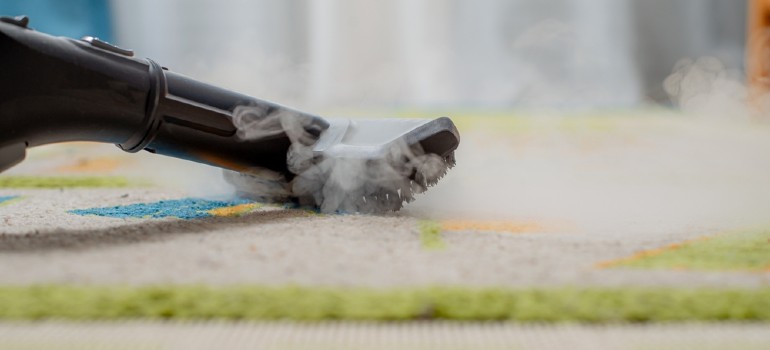
Winter is genuinely the worst time to clean your carpets. Not because it can’t be done, but because cold, damp air slows everything down. Moisture can take significantly longer to lift out of a carpet in winter than in the warmer summer months. That’s not a minor inconvenience. A carpet that stays wet too long develops problems you really don’t want: mould in the backing, musty smells that don’t shift, and an underlay that holds damp like a sponge.
The thing is, knowing how to dry carpet after cleaning in winter isn’t complicated. It just requires the right approach from the moment the cleaning finishes. Get that part right, and you’re fine. Get it wrong, and you’re dealing with a damp carpet for days.
This post covers the practical techniques that actually work, how to tell when your carpet is genuinely dry, and what to avoid along the way.
TL;DR
- Use a dehumidifier to pull moisture out of the air as the carpet dries.
- Apply gentle background heating to raise the room temperature without overheating the fibres.
- Open windows during daylight hours to encourage cross-ventilation.
- Book cleaning appointments in the morning so drying has the full day ahead of it.
- Don’t put furniture back until the carpet is dry all the way through, not just on the surface.
Table of Contents
How Do You Dry Carpets Effectively After Cleaning in Winter?
To dry a carpet effectively after cleaning in winter, you need to tackle three things at once: shift moisture out of the air with a dehumidifier, raise the ambient temperature with gentle background heating, and get air moving across the carpet’s surface. Together, these create the conditions for evaporation. On their own, none of them works as well. Running a dehumidifier in a cold, still room is better than nothing. It’s not as good as doing all three.
Here’s the basic physics. Wet carpet dries when the moisture in the fibres evaporates into the surrounding air. Cold air holds far less moisture than warm air before it becomes saturated. Once the air in the room is saturated, evaporation slows to almost nothing. A dehumidifier solves this by continuously stripping moisture out of the air, keeping it capable of absorbing more. Heating speeds the process up by increasing the evaporation rate. Airflow carries moisture-laden air away from the carpet surface and replaces it with drier air.
The steps below lay this out clearly.
How to dry a carpet effectively after cleaning in winter, using a combination of dehumidification, heating, and airflow management.
Run a dehumidifier in the room immediately after cleaning
Position a dehumidifier as close to the centre of the room as possible, so it draws moisture from the widest area. Empty the water tank regularly. In winter, it can fill faster than you’d expect because the room will already have moderate humidity before you start. Keep the dehumidifier running until the carpet is fully dry, not just until it feels dry on top.
Set background heating to a steady, moderate temperature
A comfortable, steady room temperature supports drying well. Avoid cranking the heat up as high as it will go. Rapid or excessive heat can cause carpet fibres and backings to shrink or distort, particularly with blended or wool carpets. Central heating set to a steady background level is fine. A fan heater aimed directly at the carpet from close range is not.
Create airflow across the carpet surface
Open windows on opposite sides of the room if you can, even by a small amount. This creates cross-ventilation, which pulls moisture away from the surface much more efficiently than still air. If outdoor temperatures are very low and opening windows is impractical, use a fan to keep air moving. A pedestal fan set to sweep across the carpet works well.
Open windows during daylight hours only
In winter, outside air is often drier than indoor air, which makes ventilation helpful even when it feels counterproductive. But once temperatures drop at night, the cold can counteract your heating and slow drying significantly. Open windows during the middle of the day when outdoor temperatures are at their highest, then close them in the late afternoon.
Keep the room clear until the carpet is genuinely dry
Don’t place furniture back on the carpet until it’s dry all the way through. Furniture legs concentrate weight onto a small surface area. If that area is still damp, you risk crushing damp fibres flat, trapping moisture underneath, and potentially staining the carpet with rust or dye from furniture feet. Move furniture back cautiously and use felt pads or plastic foot protectors where possible.
Why Does Carpet Take So Much Longer to Dry in Winter?
Cold air holds less moisture. That’s the short answer. At low temperatures, air reaches saturation point far sooner than it does in summer, which means it quickly becomes unable to absorb any more water from the carpet. Evaporation stalls. The carpet stays wet.
There’s also the ventilation problem. In summer, windows are open, air moves through the house freely, and moisture disperses naturally. In winter, most people keep everything shut to hold the heat in. The result is still, humid indoor air that’s already working at near capacity. Add a wet carpet into that environment, and drying slows to a crawl.
Underlay makes it worse. The carpet backing and underlay beneath it hold moisture in a way the pile fibres don’t. The surface can feel dry to the touch while the underlay underneath is still genuinely damp. In winter, with limited airflow and cool temperatures, that moisture can take a very long time to clear. This is where mould problems typically start. Not on the surface you can see. Underneath it.
Timing makes a significant difference here. Cleaning in the morning means drying happens during the warmest, most ventilated part of the day. Cleaning in the afternoon or evening, when temperatures are dropping and windows are closing for the night, is considerably less forgiving.
How Do You Know When a Carpet Is Fully Dry?
This trips people up more than you’d think. A carpet that feels dry on the surface isn’t necessarily dry. The pile fibres at the top are the first to dry because they have the most exposure to air. The backing and underlay underneath take considerably longer. If you put furniture back or start using the room normally while moisture is still sitting in the base layers, you’re creating exactly the conditions that mould and odour need.
Here’s what actually confirms a carpet is dry throughout:
- No coolness when you press down firmly. Press your palm flat against the carpet and push down into the pile. A dry carpet feels the same temperature as the surrounding air. A damp one feels noticeably cool or slightly clammy, even if the surface appears dry.
- No musty or earthy smell. A lingering damp smell is one of the clearest signs that moisture is still present in the backing or underlay. Fresh carpet smells neutral. Any hint of mustiness means the drying isn’t finished.
- Stable room humidity. If your dehumidifier is still filling its tank at a high rate, the carpet is still releasing moisture. When output slows significantly and the room humidity stabilises at a normal level, that’s a good indicator.
- Fibres stand up and feel normal. Damp carpet fibres tend to feel slightly matted or heavy. Dry fibres spring back to their natural position and feel consistent across the whole area.
- No visible moisture on skirting boards or nearby walls. If condensation or dampness is appearing on surfaces near the carpet’s edge, it’s still off-gassing moisture into the room. Wait until those surfaces are clear.
In winter conditions, a professionally cleaned carpet typically takes anywhere from 6–12 hours to dry properly with good conditions in place. Without active drying measures, that can stretch to 24 hours or more. Plan for it.
What Equipment Actually Helps With Winter Carpet Drying?
Not everything sold as a drying solution does much in practice. These are the tools that genuinely make a difference:
- Dehumidifier. The single most useful piece of equipment for winter carpet drying. It actively removes moisture from the air, which keeps the evaporation gradient working in your favour. A compressor-style dehumidifier works best in warmer indoor conditions. A desiccant dehumidifier handles cold rooms more effectively.
- Pedestal fan or box fan. Moves air across the carpet surface, replacing saturated air with drier air. Works best when paired with a dehumidifier rather than used alone. Point it to direct airflow horizontally across the pile, not straight down onto it.
- Central heating. Steady background heat raises the room temperature, which increases the rate of evaporation and keeps the air capable of holding more moisture before it reaches saturation. Use it at a consistent, moderate setting rather than cycling it on and off.
- Wet and dry vacuum. If you’re cleaning carpets yourself rather than using a machine that extracts as it goes, a wet and dry vacuum used immediately after cleaning removes a significant portion of moisture before drying even begins. Less water in means faster drying out.
- Air mover or carpet drying fan. A step up from a standard pedestal fan, these low-profile units push high-volume airflow across floor surfaces. Professional cleaners often bring them as part of the job. If you can hire one, it’s worth it in winter.
A professional carpet cleaning service typically brings high-powered extraction equipment that removes a large proportion of the moisture at the cleaning stage itself, which significantly reduces drying time even in winter. That head start matters.
Frequently Asked Questions
Why does my carpet seem to stay damp longer in winter months?
Cold air holds significantly less moisture than warm air, which means the air in your home reaches saturation point quickly and can’t absorb further moisture from the carpet. At the same time, reduced ventilation in winter keeps that saturated air trapped in the room. Both factors slow evaporation considerably. The underlay beneath the carpet also holds moisture that surface-level drying doesn’t address.
What is the ideal indoor humidity level for carpet drying?
For effective carpet drying, aim for indoor relative humidity of around 40–55%. Above that range, evaporation slows because the air is already carrying significant moisture. A dehumidifier with a built-in humidity display helps you monitor this directly. Once the room settles consistently in that range and stays there without the dehumidifier working hard, the carpet is likely fully dry.
Can using a heater damage carpets during the drying process?
Gentle background heating from central heating won’t harm most carpets. The risk comes from direct heat sources placed close to the carpet, such as fan heaters aimed at the pile from a short distance, or portable electric heaters left in one spot. Concentrated heat can cause wool fibres to shrink, adhesive backings to soften, and synthetic fibres to distort. Keep heat ambient rather than directed.
How long should I wait before replacing furniture on a cleaned carpet?
In summer conditions with good airflow, most carpets are ready for furniture after 4–6 hours. In winter, even with active drying measures in place, it’s sensible to wait at least 8–12 hours, and longer if you’re not using a dehumidifier. The backing and underlay take longer to dry than the surface pile, so test with the palm-press method before deciding furniture can go back.
What signs tell me it’s safe to use the carpet normally again?
The carpet should feel room temperature, not cool, when you press your palm firmly into the pile. There should be no musty smell. Fibres should spring back normally rather than feeling matted or heavy. Room humidity should have stabilised. If you’re unsure, give it another couple of hours with the dehumidifier running. Resuming use too early on a partially dry carpet can compact the fibres and trap residual moisture in the base.
Want your carpets cleaned and dried properly?
Enter your postcode to view our rates and availability in your area.
For questions about the services we offer visit our main site
Conclusion
Knowing how to dry carpet after cleaning in winter comes down to one principle: don’t fight the cold air, work around it. A dehumidifier removes moisture from the air so evaporation can keep happening. Moderate background heating keeps the room at a temperature where that evaporation runs efficiently. Ventilation during daylight hours cycles out the saturated air and brings in drier air from outside. Do all three, and winter stops being the obstacle it seems.
The other thing worth holding onto is the difference between surface-dry and actually dry. Press your palm into the pile. No coolness, no smell, fibres standing normally. That’s your signal. Everything before that is just patience.





Leave a Reply