

Let’s face it, the bathroom is nobody’s favourite room to clean in the house. Even though it’s among the smallest, the chrome and ceramic surfaces can be an absolute pain to clean. And that’s before we even mention the dreaded limescale, which is a constant plague in our bathrooms.
This bathroom cleaning checklist breaks the job into three tiers: daily tasks that take under five minutes, a weekly deep-clean sequence, and monthly jobs that most people skip until something goes wrong. Inside, you’ll find what cleaning supplies you’ll need, the correct order to tackle each task, plus hacks and tips to get the job done without wasting time.
 Add to Preferred Sources
TL;DR
- Split bathroom cleaning into daily (5 minutes), weekly (deep clean), and monthly (descaling, extraction fan, medicine cabinet) tasks.
- Always clean top to bottom so falling dust and debris land on surfaces you haven’t cleaned yet.
- A baking soda paste (3 parts baking soda to 1 part water) removes hard water spots from shower screens and stubborn grout stains.
- Disinfectant spray and a vinegar solution handle most toilet and tile surface jobs without strong chemicals.
- Drying the shower screen with a squeegee after every use is the single most effective way to prevent limescale and soap scum build-up.
Table of Contents
What cleaning supplies do I need for the bathroom?
Before anything else, make sure you have everything to hand. Here’s what you’ll need for a full bathroom clean:
- Store-bought all-purpose cleaner;
- Disinfectant spray;
- Glass cleaner, tub and tile cleaner;
- Vinegar (optional);
- Baking soda (optional);
- Lemon juice (optional);
- Microfibre cloth;
- Paper towels;
- Mop and bucket;
- Sponge;
- Toilet cleaner;
- Hard bristle brush;
- Broom;
- Hoover;
- Rubber gloves;
- Squeegee (for shower screen and walls);
- Old cloth or small brush (for medicine cabinet shelves).
We recommend keeping all of your bathroom cleaning supplies in one place, whether it be in a box under the kitchen sink or in an unused bathroom cabinet. This makes it easier whenever the bathroom is in need of cleaning, as you’ll have everything conveniently at hand.
Daily bathroom tasks
These take two to five minutes and prevent the kind of build-up that makes the weekly clean genuinely unpleasant. Done consistently, they make a noticeable difference.
- Dry the shower screen and walls. After every shower, run a squeegee down the screen and tiled walls. This is the single most effective way to prevent limescale deposits and soap scum from forming. Without it, hard water minerals bond to the glass within hours of drying.
- Wipe down the sink and tap. A quick wipe with a damp cloth after use stops toothpaste, soap residue, and water spots from hardening onto the surface.
- Hang towels to dry properly. Damp towels left bunched up are a reliable source of mildew odour. Spread them out fully so they dry between uses.
- Give the toilet seat a quick wipe. A fast pass with a disinfectant spray and paper towel keeps bacteria at bay between deeper cleans.
- Empty the bin if it’s full. A small bathroom bin fills quickly. Don’t leave it sitting overnight.
Weekly bathroom tasks
This is the core of your bathroom cleaning checklist: a thorough clean of every surface, fitting, and fixture. Set aside 30 to 45 minutes and work through the steps below in order.
A step-by-step weekly bathroom cleaning sequence, working top to bottom for maximum efficiency.
Declutter all surfaces
Start with some decluttering. Remove all bottles, soaps, toothbrushes and other items from surfaces. Clearing everything out protects your products from getting splashed during the scrubbing, and means you won’t be cleaning around obstacles. Place items in a box or basket until you’re finished.
Apply cleaner to surfaces
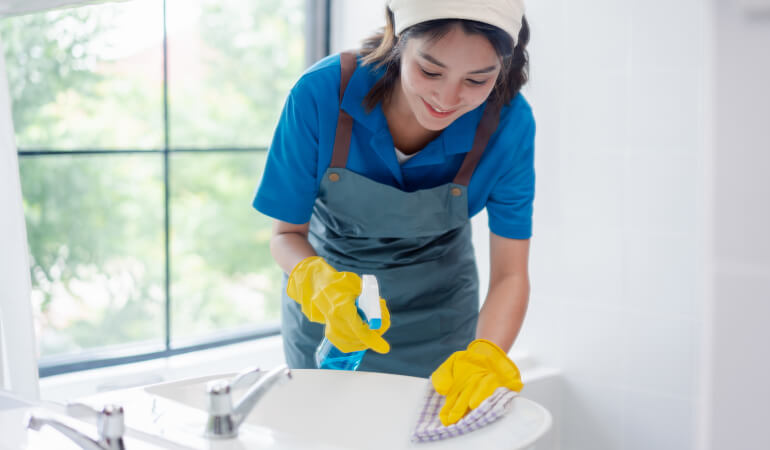
Spray the sink, shower, bathtub and toilet with your chosen cleaner now, so there’s enough time for it to soak while you tackle other areas. If you don’t have an all-purpose cleaner, vinegar and baking soda work well. A vinegar and baking soda combination removes tough stains and smells from the toilet bowl. You can also drop a dishwasher tablet inside to get that limescale dissolved fast. For limescale on other surfaces, mix one cup of warm water with one cup of vinegar in a spray bottle, saturate the affected area, and leave it for 15 minutes before wiping with a microfibre cloth. Repeat for deeper stains.
Scrub the sink, shower, bathtub, taps and toilet
Now that the cleaner has had time to work, scrub away the stains using a sponge or hard-bristle brush. Use your disinfectant spray on the toilet bowl, seat, and surrounding surfaces. Be careful with chrome fixtures: they scratch easily if you use anything too abrasive. A gentle touch with a microfibre cloth is best for taps and shower fittings.
Remove limescale from chrome
Limescale on chrome taps is stubborn but straightforward to shift without strong chemicals. Soak an old cloth in vinegar or pure lemon juice (or a mix of both), place it directly on the affected chrome, and make sure it’s in full contact with the surface. Leave it for around an hour, then remove the cloth and wipe down. This method also works for the showerhead — unscrew it and leave it submerged in the solution overnight, then wipe clean in the morning.
Clean the mirror and shower screen

A glass cleaner and microfibre cloth handle most of this. Spray and wipe, removing any streaks or stains. For hard water spots and soap scum deposits on the shower screen that won’t shift, make a baking soda paste: mix three parts baking soda with one part warm water to form a thick paste, apply it to the stubborn spots, leave for 15 minutes, then wipe away. Keep a dry cloth handy to remove any leftover liquid or streaks.
Scrub the grout (surface maintenance)
Use warm water and a hard-bristle brush to remove surface stains on tile and grout. For more stubborn staining, spray vinegar over the area and leave for 10 minutes before scrubbing. This level of grout maintenance is sufficient for a weekly clean. Deep treatment of set-in mould or staining belongs in the monthly tasks below.
Clean the floor
Hoover or sweep any dust and debris from the floor first. Then mop and remove any stains. A microfibre mop works well on most hard bathroom floors.
Finishing touches
Buff your chrome fixtures with a dry microfibre cloth. Give all surfaces a final wipe to make sure nothing has been missed. Put your products back, rearrange them so they’re ready to use, and empty the bin if necessary.
Monthly bathroom tasks
These are the jobs that most people skip until something becomes visibly wrong. Done once a month, they take less than an hour in total and prevent the kind of deterioration that is genuinely difficult to reverse.
- Descale the showerhead. Unscrew the showerhead and submerge it in a solution of equal parts white vinegar and warm water overnight. In the morning, wipe away any remaining limescale with a dry cloth. If you’ve noticed the water flow weakening gradually, this is almost certainly the cause.
- Clean and declutter the medicine cabinet. Empty the shelves completely, wipe them down with a damp cloth, and check expiry dates on anything stored inside. A clean, organised medicine cabinet is easier to use and means nothing gets lost at the back.
- Clean the extraction fan. Switch off the power, remove the cover, and rinse it under warm water. Wipe the fan blades with a damp cloth to remove the grey felt of accumulated dust. A blocked extraction fan is the most common reason bathrooms retain moisture and develop mould problems.
- Inspect and treat grout for mould and mildew. Look for dark spots in the grout between tiles, particularly in corners and around the bath or shower tray. If you find them, rub a baking soda paste into the affected grout (3 parts baking soda to 1 part water), leave for 15 minutes, spray with vinegar, then scrub with a hard-bristle brush. Mould in grout spreads if left untreated, so catch it early.
- Wash the shower curtain or liner. Most fabric shower curtains and plastic liners can go in the washing machine on a gentle cycle. Soap scum and mildew accumulate on them faster than they look, particularly at the bottom hem.
- Clean the toilet cistern lid and tank exterior. Wipe down the top and sides of the cistern, which collect dust and residue that the weekly clean tends to miss. If you notice any discolouration inside the tank when the lid is removed, that’s a sign of mineral or bacterial build-up worth addressing.
- Dust light fixtures and countertops thoroughly. A monthly pass with a dry microfibre cloth on light fittings, the shower curtain pole, and any high ledges catches what routine cleaning doesn’t reach.
Need help cleaning your bathroom?
Cleaning a bathroom is never an easy job and can take anywhere from 30 minutes to 2 hours, depending on the size and condition of the space. Time that can be better spent with family or friends. So, why not leave the job to us at Fantastic Cleaners?
We’ll send a cleaner to your property, who is armed with the experience, knowledge and tools to clean any home to the highest standard. No mess is too big or too small for the cleaners to deal with. So, contact us today for a professional domestic cleaning service!
Need a hand with the bathroom cleaning or any other house chore? We are always ready to assist!
Enter your postcode to view our rates and availability in your area.
For questions about the services we offer visit our main site
Frequently Asked Questions
How long does it take to clean a bathroom?
A weekly deep clean typically takes 30 to 45 minutes for an average-sized bathroom. A quick daily wipe-down of the sink, toilet seat, and shower screen takes under five minutes. The monthly tasks (showerhead descaling, extraction fan, grout treatment) add roughly another 30 to 60 minutes spread across individual jobs.
How often should I deep clean my bathroom?
A thorough clean of all surfaces, fittings, and the floor should happen weekly. Monthly tasks — descaling the showerhead, cleaning the extraction fan, treating grout for mould, and clearing out the medicine cabinet — go deeper than a weekly clean covers. Daily habits like drying the shower screen reduce how much effort the weekly clean actually requires.
What is the best homemade bathroom cleaner?
A mix of equal parts white vinegar and warm water in a spray bottle creates a homemade bathroom cleaner that can handle limescale, soap scum, and general surface grime effectively. For tougher stains on grout or shower screens, a paste of three parts baking soda to one part water applied directly to the stain and left for 15 minutes works well. Neither requires strong chemicals and both are safe on most bathroom surfaces.
How do I stop mould growing in my bathroom?
The main cause is trapped moisture. Run the extraction fan during and for 15 minutes after every shower, and open a window where possible. Drying the shower screen and tiled walls with a squeegee after each use removes the standing water that mould needs to establish itself. Check the grout monthly and treat any dark spots with a baking soda paste and vinegar scrub before they spread.
Conclusion
A bathroom cleaning checklist only works if the frequency matches the job. Daily habits prevent build-up. The weekly deep clean deals with what daily habits can’t. Monthly tasks catch the things that go unnoticed until they become a real problem. Split across those three tiers, none of it is especially demanding — it’s the absence of a system that turns bathroom cleaning into a chore you dread.
Cleaning something properly once takes longer than doing it badly several times over. Get the routine right and you won’t be back scrubbing the same grout a fortnight later.






Leave a Reply