
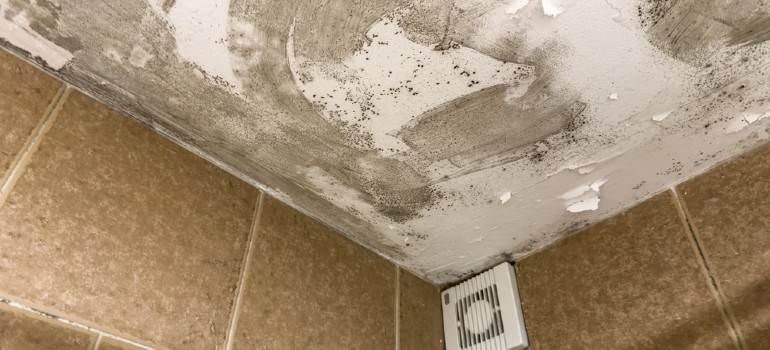
That grey-black patch spreading across the corner of your bathroom ceiling isn’t going away on its own. If you’ve spotted it, it’s probably been growing quietly for weeks. Bathroom ceiling mould is one of the most common household problems in UK homes, and given the amount of steam that fills a bathroom every single day, it’s really no surprise.
The real issue is that most people either ignore it too long or reach for the wrong thing when they finally tackle it. Neither approach works out well. This guide covers what actually removes bathroom ceiling mould, which methods are suited to which situations, and how to stop it coming back once you’ve dealt with it.
TL;DR
- Bathroom ceiling mould is caused by excess moisture and poor ventilation, not just lack of cleaning.
- White vinegar and baking soda are effective natural options for mild to moderate mould.
- Commercial anti-mould sprays and diluted bleach tackle more stubborn or widespread growth.
- Always wear gloves and a mask when cleaning mould, and keep the room ventilated.
- Prevention hinges on controlling humidity through extractor fans, ventilation, and mould-resistant paint.
- Inspect your bathroom ceiling every three months to catch early growth before it spreads.
- Call in a professional for large-scale infestations or mould that keeps returning despite treatment.
Table of Contents
How to Clean Mould Off Your Bathroom Ceiling
To clean mould off a bathroom ceiling, you apply a cleaning solution directly to the affected area, allow it to work, then wipe or scrub it away. The right method depends on how severe the mould is. Mild growth responds well to natural solutions like white vinegar. Heavier or deeply embedded mould usually needs a commercial anti-mould spray or a diluted bleach solution. Whichever method you use, preparation and safety gear matter just as much as the cleaning agent itself.
Here’s a clear overview of the main options and when to use each one:
- White vinegar solution. White vinegar is mildly acidic, which disrupts the mould’s cell structure and kills it at the surface. It’s non-toxic, widely available, and safe to use without fumes building up dangerously. Best suited for early-stage mould or lighter patches where staining isn’t yet deep. It won’t bleach the ceiling either, which is useful if you want to avoid discolouration.
- Baking soda paste. Baking soda is alkaline and mildly abrasive, which makes it useful for scrubbing away surface mould once vinegar has loosened it, or as a standalone treatment on smaller patches. Mix it with a small amount of water to form a paste, apply it, leave it briefly, then scrub gently. It also absorbs some residual moisture, which helps.
- Commercial anti-mould sprays. These are formulated specifically for mould and mildew and tend to be more effective on established growth. They often contain fungicidal agents that kill the mould and prevent regrowth for longer than natural alternatives. Read the label carefully, follow the stated dwell time, and make sure the room is well ventilated. A solid choice when natural methods haven’t fully done the job.
- Diluted bleach solution. Bleach is powerful and will kill mould effectively, but it comes with trade-offs. It can damage or discolour some painted surfaces, produces fumes that build up fast in a small bathroom, and must be diluted correctly. A ratio of one part bleach to ten parts water is typically recommended. Open a window, wear a mask, and don’t mix it with any other cleaning products.
Step-by-Step Guide to Cleaning Mould Off Your Bathroom Ceiling
The vinegar method is a good starting point for most bathroom ceilings. It’s accessible, effective on mild to moderate mould, and won’t fill the room with harsh fumes. Here’s how to do it properly.
How to clean mould off your bathroom ceiling using a white vinegar solution, from preparation through to final rinse.
Gather your materials
You’ll need undiluted white vinegar, a spray bottle, a sturdy step ladder, rubber gloves, a face mask (ideally FFP2 or higher), safety goggles, old cloths or sponges, and a bucket of warm clean water for rinsing. Don’t skip the safety gear. Ceiling work means you’re directly beneath anything dripping down, and mould spores disturbed during cleaning go straight into the air around your face.
Prepare the bathroom
Open any windows and switch on the extractor fan if you have one. Remove towels, toiletries, and anything stored beneath the affected area. You don’t want mould debris falling onto them. Lay an old towel or sheet on the floor to catch drips. The more airflow you have, the better.
Apply the vinegar solution
Pour undiluted white vinegar directly into a spray bottle. Standing safely on your step ladder, spray the mouldy area generously. You want the surface properly wet, not just damp. If the patch is large, work in sections rather than trying to cover it all at once.
Leave it to work
This is the step most people skip in their impatience. Leave the vinegar to sit on the mould for at least one hour, ideally longer for heavier growth. The acid needs time to break down the mould’s structure. Wiping it off immediately wastes most of its effectiveness.
Scrub and wipe away
Using a cloth, sponge, or soft-bristled brush, scrub the treated area firmly but without gouging the ceiling surface. Work in small circles and rinse your cloth frequently in the clean water bucket. You’ll likely see the mould lifting away. For any remaining stubborn spots, apply a little baking soda paste and scrub again.
Rinse and dry
Wipe the area down with a clean damp cloth to remove any vinegar residue, then dry it as thoroughly as you can with a dry cloth. Leaving the surface wet defeats the purpose. Moisture is what caused the mould in the first place. Keep the window open and the fan running for a good hour afterwards to let the ceiling fully dry out.
What Causes Mould on Bathroom Ceilings?
Bathrooms are warm, humid, and often poorly ventilated. Every shower or bath sends a cloud of steam upward, and that steam has to go somewhere. When it can’t escape quickly, it condenses on the coldest surface in the room, which is almost always the ceiling. That persistent damp is exactly what mould needs to take hold.
Mould is a fungus. It reproduces by releasing spores, and those spores are already floating around in the air in most homes. They’re harmless when they land somewhere dry. They become a problem when they land somewhere damp and warm, like a bathroom ceiling that’s been collecting condensation every morning for months. At that point, they germinate, spread, and the familiar dark staining begins to appear.
Poor ventilation is the root cause in most cases. An extractor fan that’s too small, clogged with dust, or simply absent makes the situation significantly worse. Bathrooms without windows, or with windows that stay shut year-round, trap moisture with nowhere to go. Over time, that creates the ideal environment for mould to thrive.
How to Prevent Mould on Your Bathroom Ceiling
Cleaning mould off the ceiling deals with today’s patch. Stopping it from coming back deals with the cause. Mould doesn’t appear because you haven’t scrubbed hard enough. It appears because there’s too much moisture and not enough airflow. Fix those two things, and mould has nowhere to thrive.
Get the ventilation right
Ventilation makes the biggest difference. Run your extractor fan during every shower or bath, and for at least fifteen minutes afterwards. If the fan is old, check that it’s actually pulling air. A clogged or weak fan can give you a false sense of security. Replacing it with a humidistat-controlled model means it switches on automatically when humidity rises, so you don’t have to remember.
No extractor fan? Open the window slightly during and after bathing. Many people shut the door and window for privacy or warmth, then wonder why mould appears. The steam needs somewhere to go.
Use mould-resistant paint
Once a cleaned patch is fully dry, paint over it with mould-resistant paint. Standard emulsion won’t stop mould from returning, but this type contains fungicidal agents that inhibit regrowth. It’s widely available, costs little more than ordinary paint, and helps a lot in bathrooms that keep getting mould.
Add a dehumidifier and wipe down after showers
A bathroom dehumidifier is worth considering, especially in a flat or a room without an external window, since it keeps pulling moisture out of the air. Peace lilies and spider plants are often recommended too. They absorb a little humidity, but they’re a bonus, not a solution. The dehumidifier and fan do the real work.
Finally, wipe the ceiling and walls with a dry cloth or squeegee after each shower. It might seem fussy, but it clears standing water before it can cause trouble. Five seconds each time adds up to a lot less mould.
Safety Precautions When Cleaning Bathroom Mould
Cleaning mould isn’t dangerous if you approach it sensibly. But disturbing a mould colony does release spores into the air, and some cleaning agents are genuinely hazardous in an enclosed space. Take the following precautions seriously before you start.
- Wear rubber gloves. Mould and cleaning agents both irritate skin with prolonged contact. Gloves are non-negotiable, particularly when using bleach or commercial sprays.
- Use a face mask. An FFP2 disposable mask prevents you from inhaling mould spores dislodged during cleaning. A basic dust mask provides minimal protection. If you have asthma or a respiratory condition, this step is especially important.
- Wear safety goggles. Ceiling work puts your eyes directly in the path of dripping cleaning solution and dislodged mould particles. This is one that’s easy to skip and regret.
- Ventilate the room fully. Open windows and run the extractor fan before you start, not after. Bleach fumes and some spray propellants concentrate quickly in a small bathroom with no airflow.
- Never mix cleaning products. Bleach combined with ammonia-based cleaners produces chloramine vapour. It’s toxic, it builds up fast in confined spaces, and it’s entirely avoidable. If you’re switching products, rinse the surface thoroughly with water first and don’t assume it’s rinsed just because it looks dry.
- Use a stable step ladder. Working overhead on an unstable surface is a genuine hazard. Make sure the ladder is properly positioned, locked, and on a non-slip floor before you climb it.
- Know when to call a professional. If the mould covers a large area, returns repeatedly despite treatment, or appears to be penetrating behind plaster or the ceiling material itself, stop and get professional help. A mould and mildew cleaning treatment carried out by specialists goes deeper than surface-level cleaning, using equipment and fungicidal treatments suited to serious infestations. It’s also worth considering if anyone in the household has an underlying health condition that makes mould exposure risky.
When Is Bathroom Ceiling Mould Too Bad to DIY?
Most bathroom ceiling mould is manageable at home. But there are situations where DIY cleaning is either ineffective or genuinely inadvisable.
If the mould covers a sizeable area, keeps returning within days of cleaning, or you can see that paint is bubbling and lifting in areas you haven’t touched, the problem isn’t surface-level. Mould that has penetrated plaster, plasterboard, or the ceiling substrate can’t be resolved with a spray and a scrub. It needs professional assessment to establish whether there’s a structural damp issue, a leak, or inadequate building ventilation driving the problem.
Anyone with asthma, a compromised immune system, or young children in the household should also think carefully before tackling significant mould growth themselves. The spore release during cleaning is real, and no mask eliminates it entirely. In those situations, getting a professional to handle it is the more sensible call.
Frequently Asked Questions
Can bathroom ceiling mould spread to other rooms?
Yes, it can. Mould releases spores that travel through the air, and if the humidity problem extends beyond the bathroom, those spores can settle and grow in adjacent rooms too, particularly where there are cold walls, poor insulation, or soft furnishings nearby. Addressing the source promptly reduces this risk considerably.
How do I know if the mould is surface-level or deeper in the ceiling?
Surface mould wipes away relatively easily and the ceiling material underneath looks intact. If the ceiling feels soft or spongy when you press it, if paint is bubbling or flaking in areas you haven’t cleaned, or if the mould returns within days of treatment, it’s likely penetrating the plaster or board beneath. That requires professional assessment rather than a DIY spray-and-wipe.
Will painting over mould kill it?
No. Painting over mould without treating it first just traps it underneath. The mould continues to grow beneath the paint layer and will push back through within weeks or months. Always kill and remove the mould fully before applying any paint, and use a mould-resistant formulation to slow future regrowth.
Does cold weather make bathroom mould worse?
Yes, significantly. In winter, bathroom ceilings and walls are colder, which means warm shower steam condenses faster and in greater quantities. Combined with windows being kept shut for warmth, cold weather creates near-ideal conditions for mould. Running the extractor fan consistently and keeping the bathroom slightly heated helps reduce condensation during colder months.
Is black mould on a bathroom ceiling the same as toxic black mould?
The term toxic black mould usually refers to a specific species called Stachybotrys chartarum, which is relatively uncommon and typically associated with severe or prolonged water damage rather than routine condensation. Most black mould on bathroom ceilings is a different species. Still worth removing promptly, but not necessarily the rare toxic variety. If you’re concerned, a professional can identify the type and advise accordingly.
Is bathroom mould getting out of hand?
Enter your postcode to view our rates and availability in your area.
For questions about the services we offer visit our main site
Conclusion
Cleaning mould off your bathroom ceiling is straightforward when you use the right method and give it enough time to work. The bigger job is making sure it doesn’t come straight back. That means dealing with the ventilation, the humidity, and the paint, not just the visible patch.
For most bathrooms, consistent use of an extractor fan and a quarterly check of the ceiling will make a real difference. For anything persistent or widespread, getting professionals involved is the more practical choice. Some problems genuinely are bigger than a spray bottle and a cloth.







Leave a Reply